
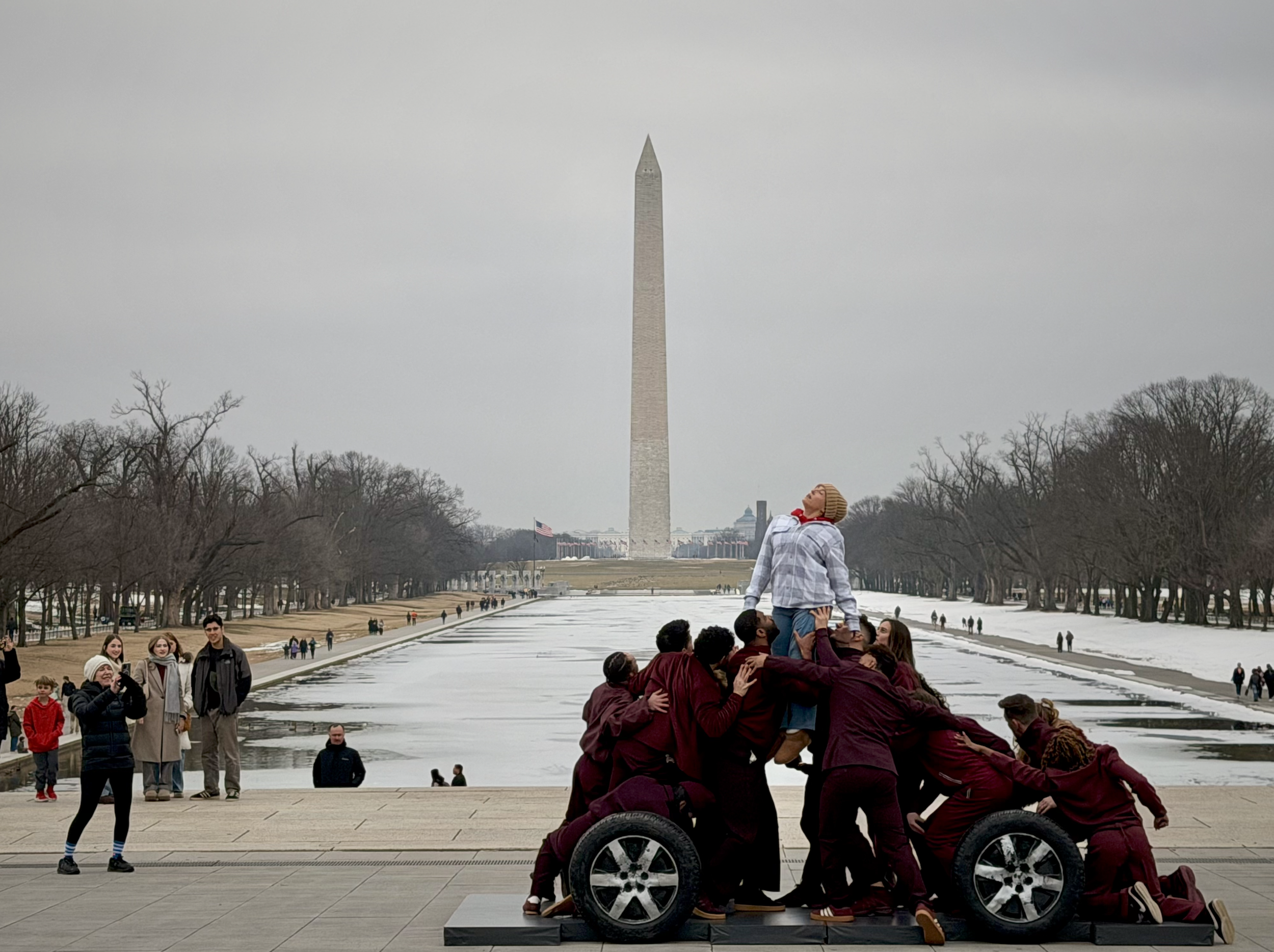
What started as a morning run through Atlanta became one of the most talked-about acts of dance activism in recent memory. Bryan Buckley, award-winning commercial director and co-founder of hungryman productions, conceived a work that would reenact the final moments of Renée Good and Alex Pretti, two American citizens whose deaths became flashpoints in the national debate over ICE. On Presidents' Day 2026, 22 professional dancers descended on Washington, D.C., performing in front of the Lincoln Memorial and, briefly and defiantly, in front of the Kennedy Center. The result, the First Amendment Troop's "ResistDance," racked up over 50 million views and drew responses from Fox News to the White House.
DanceOn sat down separately with Buckley and choreographer Matt Steffens, the creative team who shaped the movement, to get the full story.
· · ·
Bryan Buckley: The Director
Bryan Buckley has spent decades directing award-winning commercials with a parallel life running what he calls his "night job", political activism projects that have ranged from gun control campaigns to Cybertruck projections targeting Elon Musk. The First Amendment Troop is his latest viral creation yet.
Where did this idea come from?
I went for a run in Atlanta one morning and literally ran over a faded Black Lives Matter mural on the ground. I thought: why is that faded? And then I came back with the idea of a musical reenactment. If we were back with Floyd, we would have done this. And then we just sort of ran with it and started placing calls.
In my mind, what was interesting was the power of a memorial - not just for Alex and Renée - but for all those that have passed. It’s just been hell for everybody – and not just in Minneapolis. We wanted to create something that embodied the memory of those people who have sacrificed, who have lost their lives, those that were incarcerated and sent to Sudan. You’re talking about stuff that’s seriously unthinkable. Trump is the Chairman of the Kennedy Center and Lincoln memorial is one of his favorite places to do fireside chats. He sees himself as the other Lincoln. We wanted to recreate what he made there. He wrote the script; we’re showing him what he created.
How does dance as a medium serve an activist message differently than, say, a protest march or a viral video?
"The power of dance is a very underappreciated thing. It goes into a different part of the brain."
We see dance in music videos. We see it at Lincoln Center. We see our 4-year-old kid doing it. But it’s one of those things that when using in demonstration, can be an effective way to reach inside people’s minds. To open up the doors in a way they haven’t seen. We’ve all seen the videos of Alex and Renée (in this case over and over again), and we’re trying to make sense of what we’re seeing. We’re all processing. That’s all been baked into our head. In this moment, dance and movement and the emotions unlock a different part of the brain. When you see a beautiful production, that’s what happens, and unfortunately for a lot of us, that experience is getting wiped out. The arts are getting demolished, and we don’t get to see a Broadway play. We can’t afford the $400 ticket.
Instead, we get to see the gunshot unwittingly. It just comes to us on our phone, and we have to witness the actual act rather than an interpretation. You’re very alone when you look at the videos of Renée and Alex. I remember just feeling so alone and so isolated. When music comes together and community comes together and you’re creating something together, it’s different. You feel like you’re not alone. You feel like you’re a part of something. She’s been lost, but we are all together. Everyone saw the same thing I did. We’re completing the first part of the puzzle which is ‘oh, I shouldn’t have clicked on that. And now I’m watching this thing and now I got to go see the other angle because I saw this angle and now there’s this angle, and this angle and this angle.’ And now we’re going to come from another side and we’re going to show you the person – their spirit that’s been embodied in the movement – for both Alex and Renée. And they become alive. They don’t become this person who has perished horribly. They become something that you can feel. This was a person. This is a person. It gets into you and creates a conversation.
You got a response from Fox and the White House?
When the White House responded, the Chief of Communications, Steven Cheung, called it “Weak, corny, and lame. Total loser and simp behavior.” It was a terrible choice of words. This was in memory of Americans who were shot and killed plus all those other victims. What Cheung did was he fueled this whole thing to blow up with his moronic comments. He maybe thought he was going to stub this out and instead got the Right – even Fox – to go watch the video and say ‘wait a second, it’s not what you’re saying. You’re creating a lie.’
Fox called us peaceful protestors, and of course they always call you agitators. We upgraded passed that and maybe the first amendment thing got us there. They said it was a beautiful dance, and I’m like, ‘wait, Fox is saying this?!’
We blew up online very organically with people on the left and right seeing it on social media. It was nice to see that we found a common point that this was a tragedy. And we found a common point that we’re supposed to be able to go out in the streets and speak and have our first amendment rights.
“And we found another thing which is dance; people seem to just gravitate towards it. They put down their defenses, and it enters in.”
Tell us about the Kennedy Center moment — 24 cops for 22 dancers?
“The game is different now, and you can feel it.”
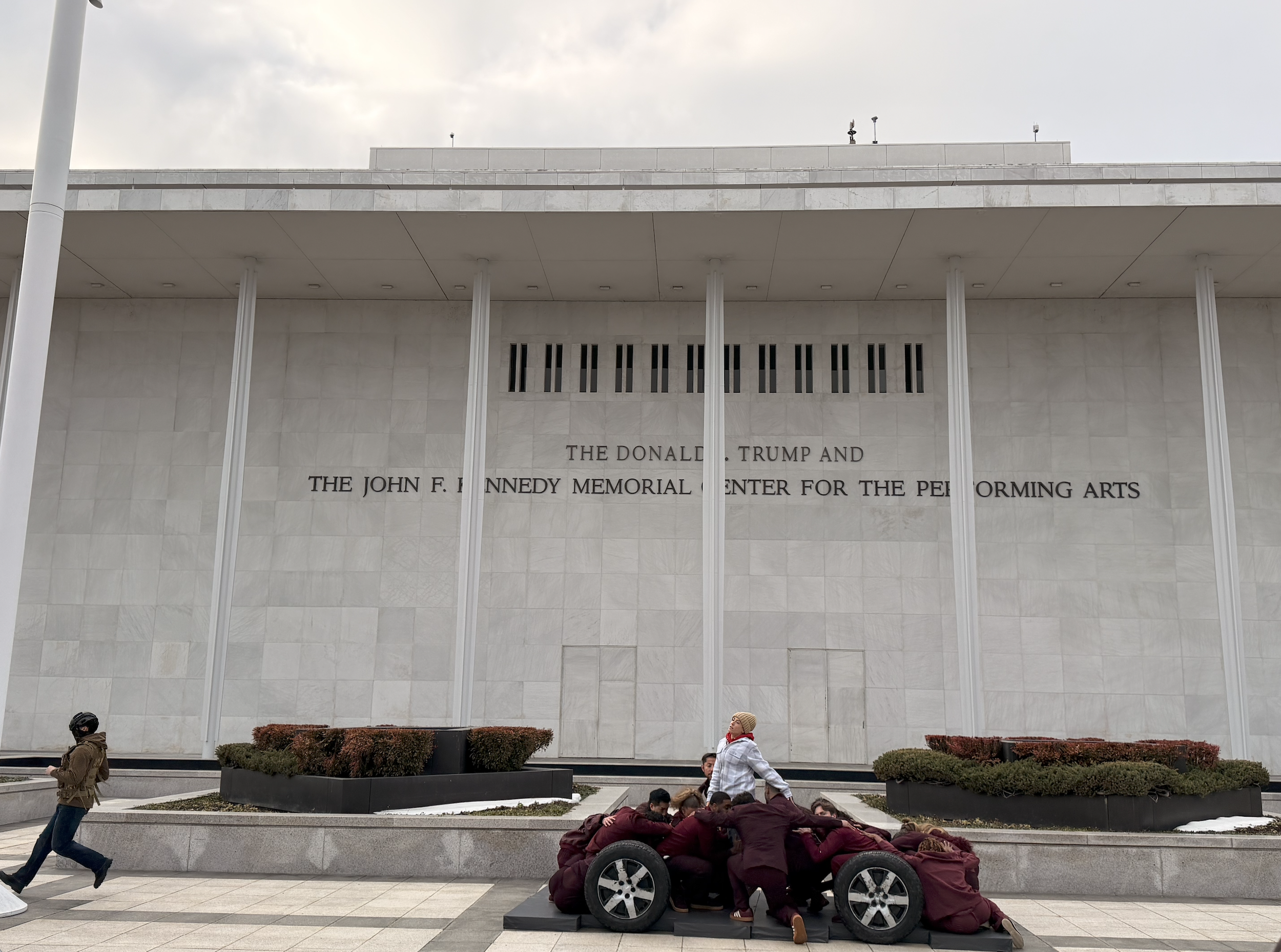
We had one take at Kennedy Center before we got shut down. Like, 40 seconds. We saw one cop up front, we had two security guys, we figured we'd grab the shot really quickly. We cut the music when they asked figuring okay, that's what they want. But nope. Stop dancing. And then 24 cops came pouring out of the inside of Kennedy Center. There were more cops than dancers which is madness. Our taxpayers are paying for 24 cops on a down day at the theater. That didn't happen in 2020. And what are we even talking about here? This is the Kennedy Center and a bunch of dancers!
Did you worry about the career blowback of being so publicly political?
I'm not going to get a Tesla job anytime soon. But the good news is he doesn't do commercial advertising anyway. I've had CEOs pull me aside and say, 'I can't publicly say this, but thank you.' A lot of times people aren't saying the thing out loud. Freedom of speech, democracy. I'm passionate about it. I'll fight for it always.
What do you want other creators to take from this?
The situation is very real and very critical. For those out there listening, this is serious. If you think you are just going to go back and read about it, put down your phone and figure out how you’re going to demonstrate about it. Don’t just click on stuff. Go out there and create. If you can dance, it’s huge. It’s a huge gift. Use it. If you can sing, use it. If you can take that to the street, use it. Shoot your own stuff. That’s my hope. Take advantage of the fact you can post on social media. People can pull this off and push it out and it can take fire. You're using music, movement, talents that go beyond the norm — and they have a way of infiltrating the other side. The Foxes of the world will say the dance was pretty good, and that's a win. Emotionally it starts to enter them.
“If you can put together a message that lands, that’s really powerful, and we need that right now.”
· · ·
Matt Steffens: The Choreographer
Matt Steffens has built a multifaceted career spanning Broadway, opera, film, and television. Before that, he worked in advertising. When Bryan Buckley called him about the First Amendment Troop, it was a rare confluence of every part of his life. He assembled 22 dancers — all of whom said yes — and got to work.
How did this come together?
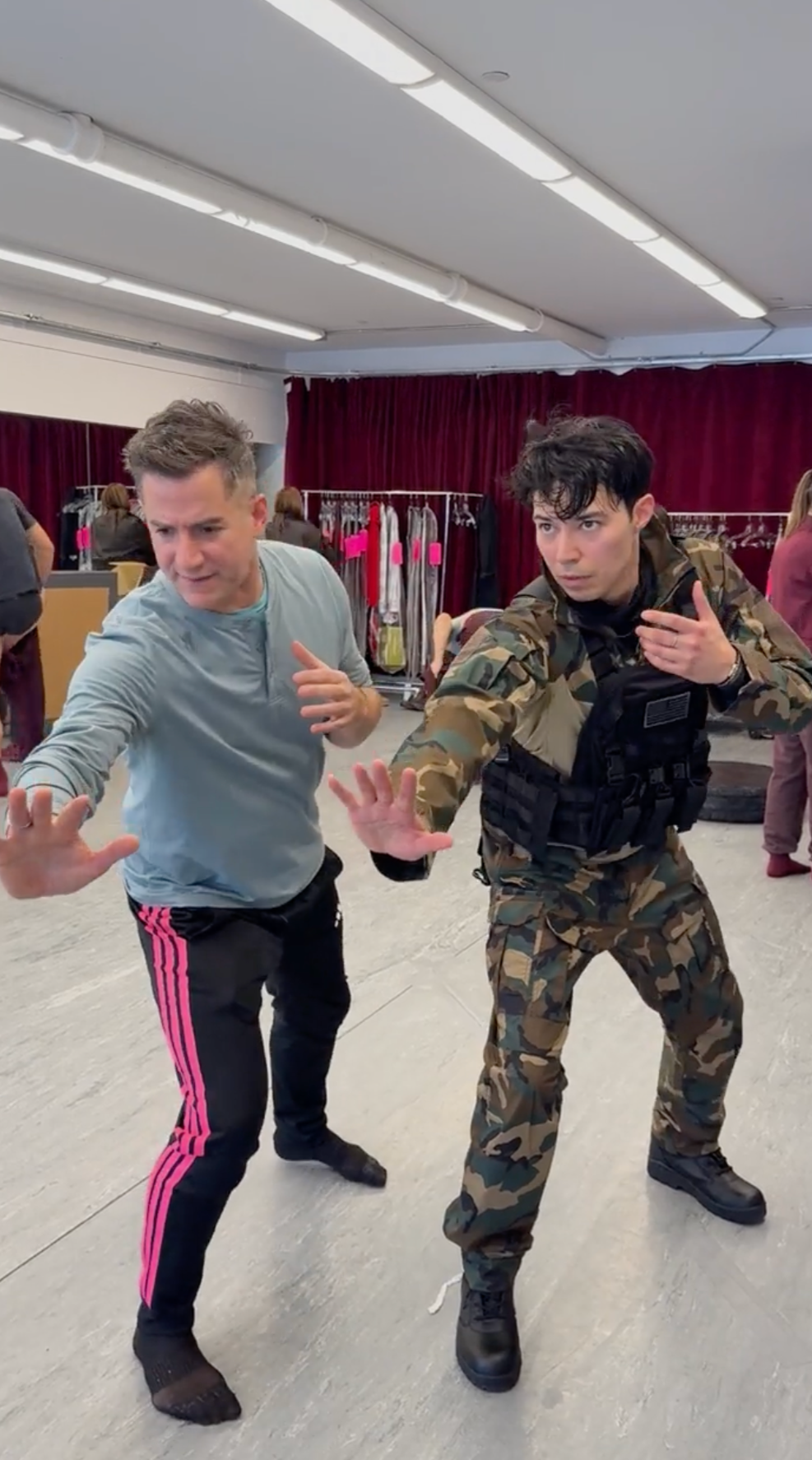
Bryan Buckley came to me and said he’d like to explore a dance activism piece. At that time only the Renée incident had happened, so we came up with a concept of honoring her life, and trying to honor all the lives, but focusing on her story. As we developed it, the Alex Pretti moment happened. Our goal the whole time has always been to bring attention to the humanity of the atrocities that are happening right now. Through the work of the First Amendment troop, we could create a captivating piece that hopefully sparked conversation and opened minds and hearts. And it seems to be doing that. I’ve gotten texts from all over the world from people talking about it.
Is combining activism with dance new territory for you?
It's kind of new for me. Hungryman productions has been doing it for a while. But activism is definitely part of my life, and dance is obviously part of my life, so it was nice to put the two together. I used to work in political advertising before I was a director and choreographer, so politics are always on my mind. We tried not to have an opinion one way or the other — just present the facts in an artistic way.
What made you want to create this piece?
“I think we were at a tipping point, and I feel like we have to draw a line in the sand at some point. This felt like it was the moment to draw a line in the sand.”
All 22 dancers said yes, which rarely happens in this business. I think they wanted to make their voices heard. And to make your voice heard in a way that enriches your art — that's really amazing. My activism started much earlier than this project, honestly. Every morning I'd check social media and just see family after family being ripped apart. That was really hard on my heart. My grandparents came over from Italy in World War I. I'm like — this is the same thing that happened to them, almost 100 years ago. Something had to be said.
Walk us through the choreographic approach.
"The impact line is here, and the cringe line is below it and above it. We were always aiming for the impact line."
My style is kind of all over the place. I have an athletic contemporary style, but it is informed by musical theater and hip hop. I try to fuse all those together. We made an effort to bring in a group of diverse dancers from all genres so that it wasn't just contemporary dancers or just Broadway dancers. We had break dancers in there, we had hip-hop dancers in there, and we had some modern dancers in there. That allowed us, I think, to create a family that represented all dancers as opposed to just a certain segment of dancers. I was blessed to have 15 dancers that came into pre-production with me. Any pre-production dancer is like a unicorn. We went through a lot of different arrangements of the car to figure out how she can pop in the car and have it not look cheesy. We wanted it to be a framework that felt strong and then fell apart when the world fell apart.
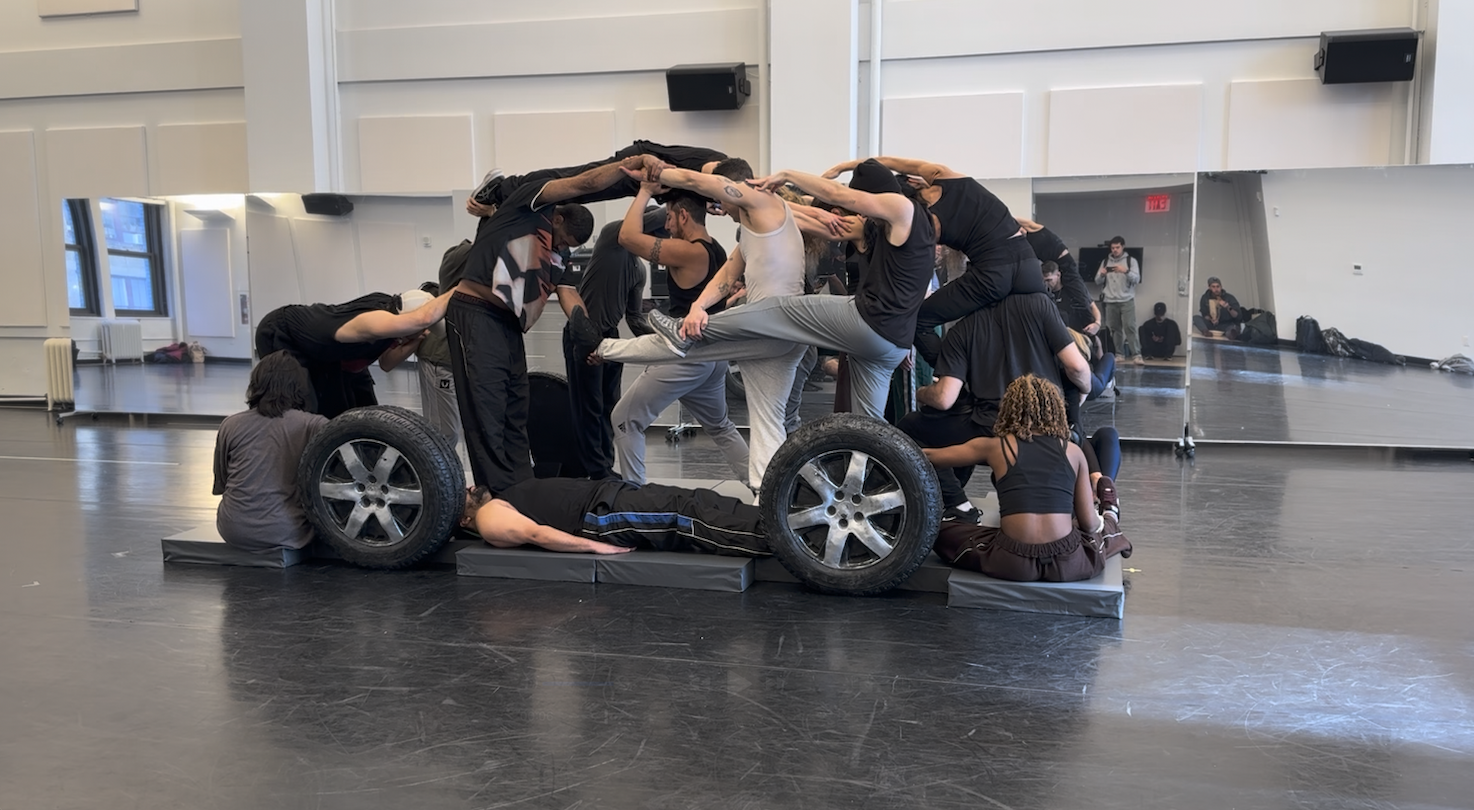
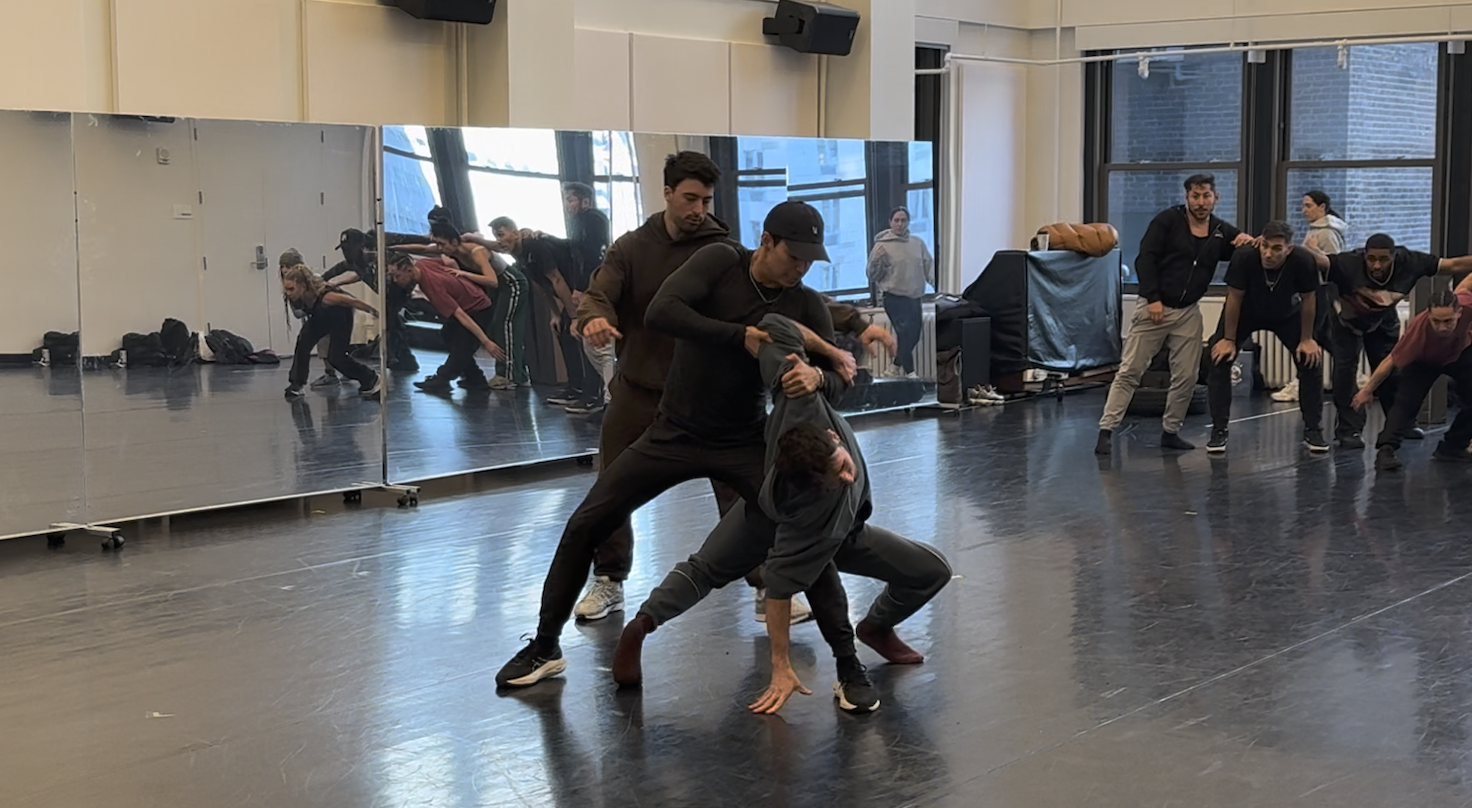
In the Alex Pretti moments, I really wanted to explore contact improv to try to create what those moments were so that it wasn't just stage combat. We have to access the moments as humans, and I think if we get too realistic or too dancey, it pulls us out.
Tell us about the shoot day.
“We knew that the government probably didn't want us there.”
We scouted the day before at the Lincoln Memorial and the Kennedy Center. I felt like we had good playing spaces. Safety is always a concern for me, especially when you have 22 dancers coming from New York who I care about a lot. At the Lincoln Memorial, we knew that we were going to have lots of crowds. We started the day there, and we ran the piece probably seven times there. We shot it with the Washington Monument in the back and with the Lincoln Memorial in the back. We had tons of people coming in and out, because they were going to see the monuments; it was amazing to see all these people from many different countries watching this piece - some of them knowing what it was and some of them not knowing what it was. So many people came up to Bryan and me and said how moved they were by the performance. So, not only was it on social media, but it was also a live event. We had a great afternoon at the Lincoln Memorial and then we regrouped and talked about our strategy to go into the Kennedy Center. We knew that that was going to be an obstacle.
We went to the Kennedy Center and started to film and security started to come over. At that time, it was only one or two security people, and they asked us to stop, so we turned off the music. I didn't want anybody to get arrested. If anybody was going to get arrested, I wanted it to be me. I think part of dance activism is pushing the envelope to stand up for your rights. This is about the first amendment. I don't think that 22 loving dancers are a threat. But they saw it as a threat and all security was called to the front and all of a sudden there were 24 officers there. It was pretty much insanity. As I look back on it with a little bit of an outside bird's eye view, it was crazy that that many security officers showed up for a dance piece that was exercising First Amendment rights. And it wasn't like we were damaging anything. We were on the sidewalk far away from the Kennedy Center. It was an interesting statement to have my own personal first amendment rights pulled away from me in that moment. It had a pretty big impact on me.
"The Kennedy Center changed my life. To be exercising our First Amendment right on those steps — and then be told 'no, you can't be here' — that was its own kind of moment."
The Kennedy Center confrontation clearly hit you personally.
After college I was dancing at night and working in advertising during the day, not confident enough to pursue it full time. I got cast at the Kennedy Center honors — one of 50 local dancers for the Chita Rivera tribute — and I looked out at those New York dancers and Andy Blankenbuehler and Sergio Trujillo and I thought: I want to be one of them. That's what took me to New York. Over 22 years I've been blessed to go back to the Kennedy Center with three different shows, both in the opera house and the Eisenhower Theater. It is hallowed ground to me. It is the pinnacle of art. The Kennedy Center is part of my DNA as a dancer and choreographer. It has always been part of my path. I would not be here with you today if I had not done that performance at the Kennedy Center and if that had not given me hope to go dream of a different life and a different career.
How did Rhiannon Giddens end up as the soundtrack?
The music was a real challenge. We went through a lot of ideas, some very dramatic, some with more of an Americana feel that we felt represented the whole country. When Rhiannon pulled out of the Kennedy Center, she moved to the top of the list. Here was activism by another artist in a completely different genre. We looked at 'We Could Fly' and 'Following the North Star.' We loved 'We Could Fly'; the lyrics matched our story so perfectly, but it just didn't have any groove. So that's why we combined them. We needed something that was driving the piece and creating a little tension.
What's your message to dancers who want to use their craft for protest?
I think of Les Misérables — the resistance, standing up, coming together. What is your 'One Day More'? I hope that the ResistDance inspires other choreographers and dancers to create their own moments in their own communities. Whether they recreate this piece or create their own, we as dancers need to continue to create conversation with our art. There are so many stories out there of people standing up. Let's put that out there.
· · ·
The First Amendment Troop's ResistDance is available to watch now. Both Bryan Buckley and Matt Steffens have expressed hope for future performances whether live, on tour, or recreated by dance communities around the world.