
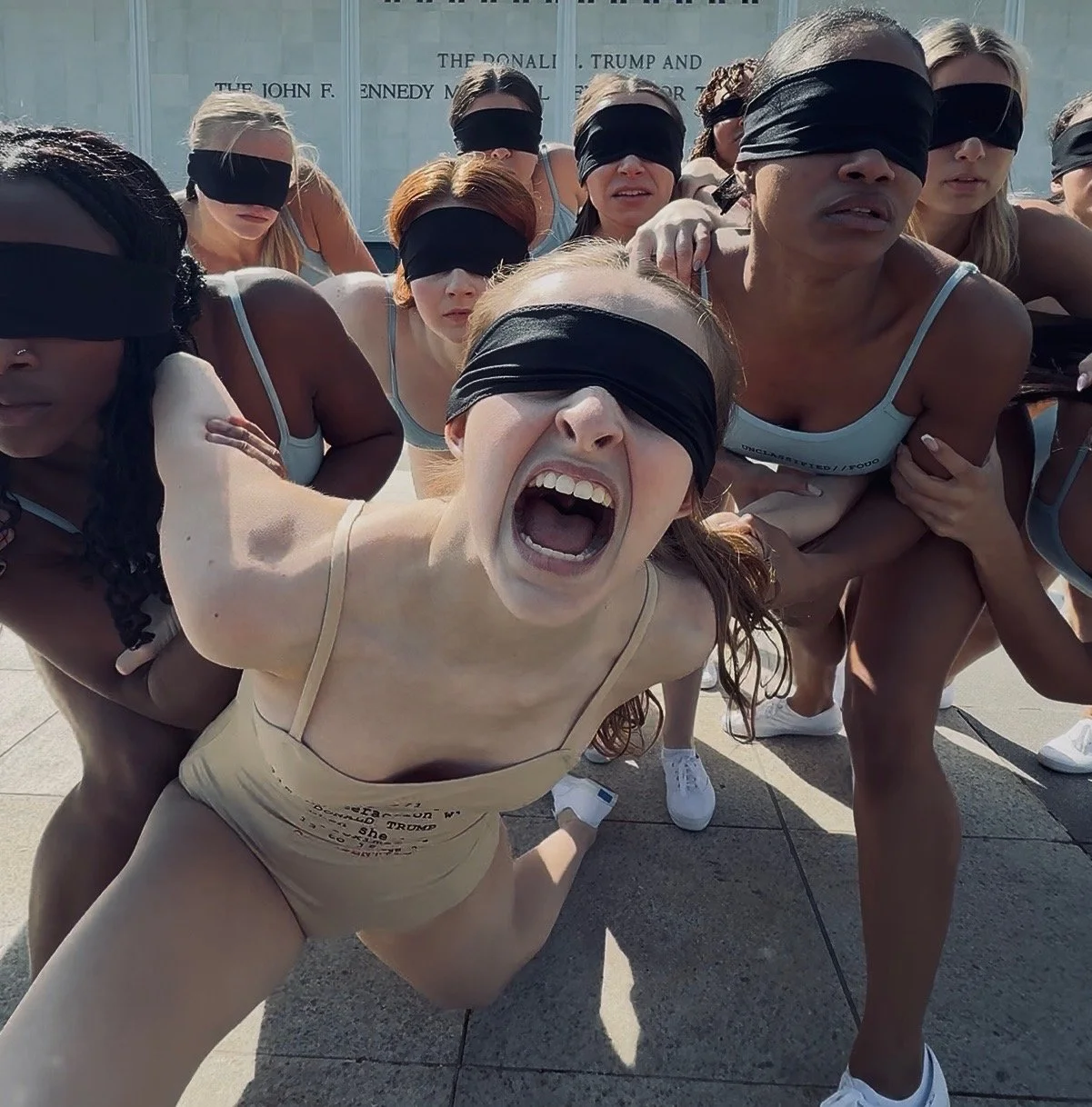
The First Amendment Troop returns with "ResistDance vs Redaction," a new work centering the testimony of Jane Doe 4. The performance was stopped by police before the second run-through.
On April 9, twelve dancers performed at the Lincoln Memorial and then the Kennedy Center in Washington, D.C. The work, "ResistDance vs Redaction," is the latest from the First Amendment Troop, the activist dance collective founded by commercial director Bryan Buckley and choreographer Matthew Steffens.
DanceOn readers will recognize both names. Earlier this year, we sat down separately with Buckley and Steffens to get the full story behind the original "ResistDance", a performance that reenacted the final moments of Renée Good and Alex Pretti, two Americans killed in incidents that became flashpoints in the national debate over ICE. That piece accumulated over 50 million views, prompted a response from the White House, and drew Fox News to describe the performance as beautiful. This new work raises the stakes considerably.
The new work
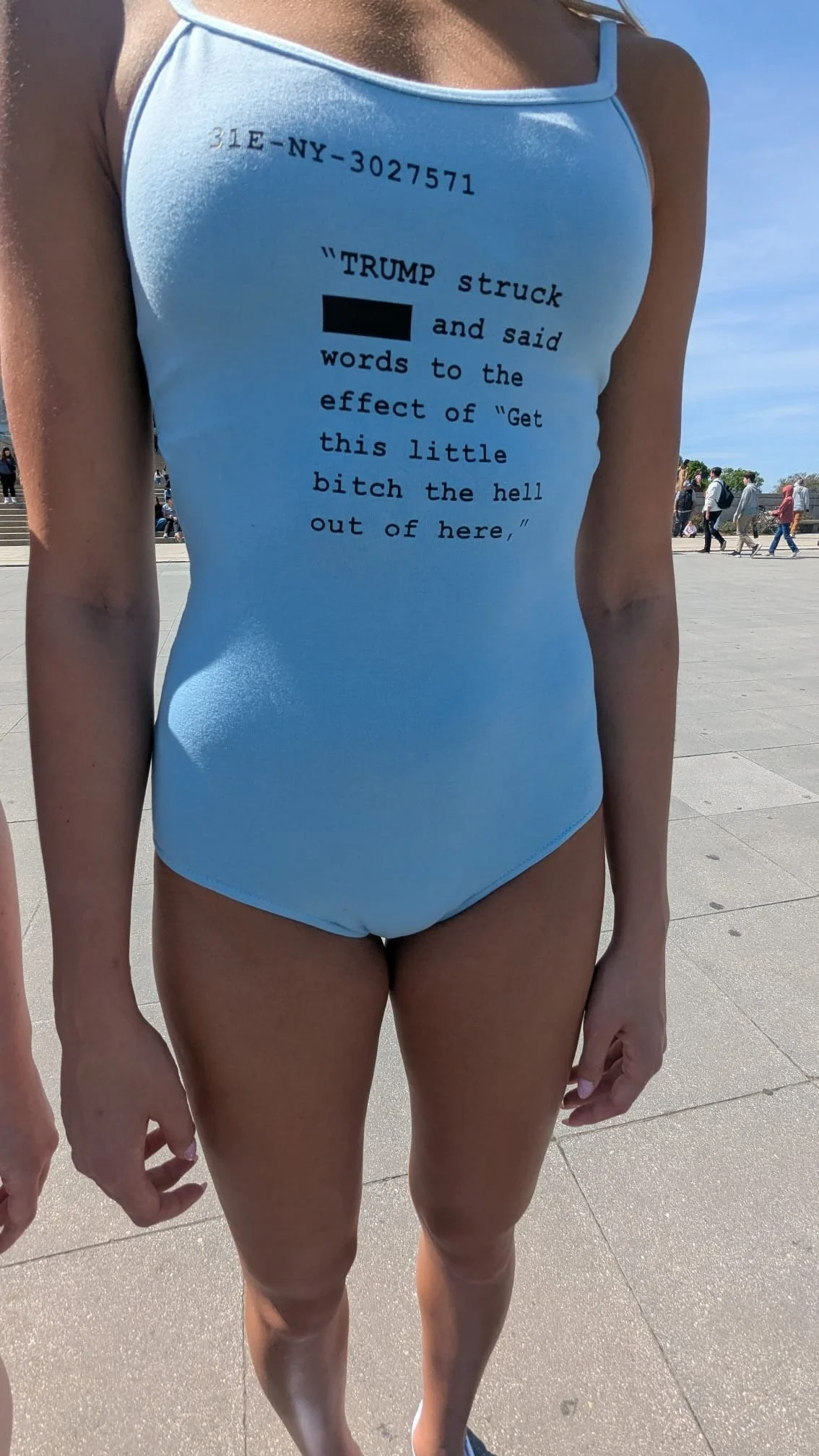
"ResistDance vs Redaction" draws from recent NPR reporting that the Department of Justice withheld and removed certain Epstein-related documents tied to allegations that President Donald Trump sexually abused a minor identified as Jane Doe 4. The performance centers her testimony, with the dancers' leotards printed with excerpts from the FBI document that allegedly went missing from the released Epstein files.

The twelve performers danced blindfolded throughout the routine. Their identities are symbolically redacted, mirroring what the piece's creators say has happened to the evidence itself. The score was Madonna's "Live to Tell," performed by a children's choir. Lead performer Devyn Scherff, 15, anchored the work as a soloist.
"I want people to know that kids my age shouldn't have to go through something like this. Dancing this piece gave me a way to express that frustration and hopefully it makes people feel something." — Devyn Scherff, lead dancer
Shut down again
If the original ResistDance was defined by the image of 24 police officers converging on 22 dancers outside the Kennedy Center, this sequel carries an echo of that confrontation. In our earlier interview, Steffens described that moment as one that changed his life; he had a personal history with the Kennedy Center stretching back to the Chita Rivera tribute that inspired him to move to New York as a young dancer. "It is hallowed ground to me," he told DanceOn.
On April 9, his dance troop was removed from that same ground again. The performance was halted by a large police presence moments after the first run-through concluded, and the dancers were escorted off the premises before a second pass could begin.
For director Bryan Buckley, who told us in our earlier conversation that "the game is different now, and you can feel it," the intervention will likely read as confirmation of that instinct. In that interview, he described the original Kennedy Center shutdown as the moment the story broke through; the White House's dismissive response drove traffic to the video from audiences across the political spectrum, including conservatives who ultimately agreed it depicted a tragedy worth acknowledging.
The political context
The April 9 performance arrived on the same day Melania Trump made public comments distancing herself from the Epstein files, and the same week that former Attorney General Pam Bondi declined to appear for a deposition related to the case despite a subpoena.
Steffens framed the work in terms he has used before — the belief that dance reaches somewhere argument cannot. "These brave women have come forward with their stories, and the country has done nothing," he said. "If we continue to accept these assaults, it will just continue."
Buckley was equally direct. "This isn't political," he said. "This is about kids who were sexually abused and one billionaire friend hiding behind another. Our children deserve to see these people for who they really are."
What comes next
What is clear is that Buckley and Steffens have no intention of stopping. In our earlier interview, Steffens put it simply: "I hope that the ResistDance inspires other choreographers and dancers to create their own moments in their own communities." With this second work, they are demonstrating what that continuity looks like in practice by returning to the same location, with a new story, and a new set of young performers willing to put their bodies on the line to tell it.
Check out the full performance in the video linked below!