
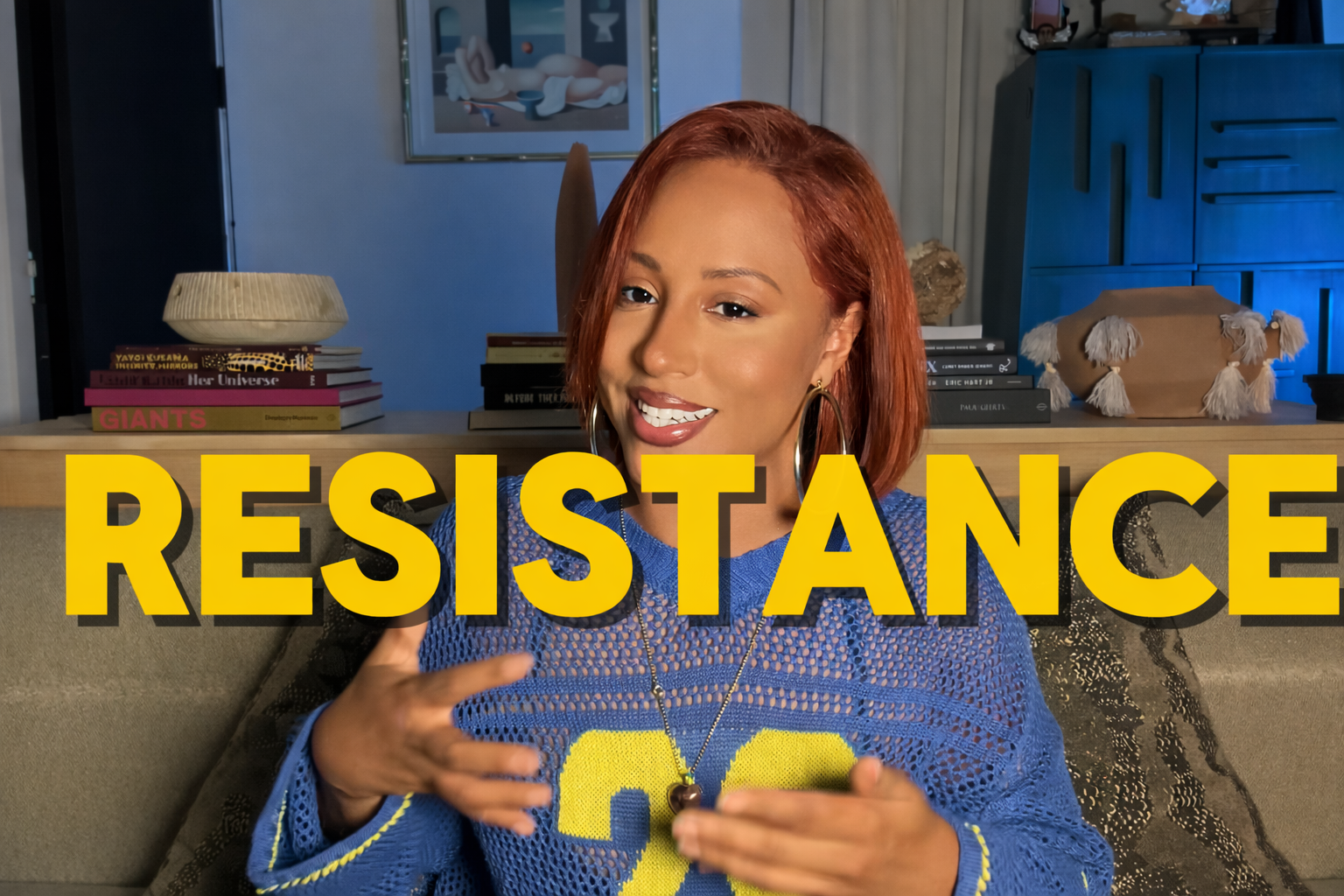
Dancer and cultural educator Melany Centeno (@melanymovez) broke down the choreography, history, and politics behind the Super Bowl LX halftime show and went viral in the process.
After Bad Bunny shattered the record for most watched Super Bowl halftime show globally (4.157 billion views in 24 hours), the internet did what the internet does; everyone had a take. But one video cut through the noise.
Professional dancer, actress, and cultural educator Melany Centeno (@melanymovez) opened with a question nobody else was asking: "Did anybody break down the dance? Like, do you even know what styles of dance you were watching? What they mean culturally, politically, historically?"
We're not going to explain it better than she did. Check out her video below. But here's why her breakdown matters.
Six Choreographers. One Intentional Team.
Most people couldn't name a single choreographer behind the show. Melany names all six and more importantly, explains why each one being on that team was a deliberate choice, not a coincidence.
Lead choreographer Charm La'Donna, from Compton, California, is a two-time Emmy-nominated choreographer, having received nominations for Outstanding Choreography for her work on Beyoncé's Christmas Day NFL halftime show and Kendrick Lamar's Super Bowl LIX halftime show in 2025. But what Melany zeroes in on is Charm's decision to co-lead alongside Karina Ortiz, Bad Bunny's longtime choreographer, who is from Bayamón, Puerto Rico and worked with him throughout his 30-show residency at the Coliseo de Puerto Rico in 2025. As Melany puts it: “Charm didn't pull from a culture; she went to the source.”
The rest of the team was equally intentional: Jovanni Soto (Boston-raised, half Puerto Rican, half Dominican, a bridge between the LA industry and Latin culture), Melanie Mercedes (Bronx-born Dominican, deeply rooted in the New York salsa and mambo scene, the first New York mambo/salsa on 2 dancer to reach the top 10 on So You Think You Can Dance and a principal dancer in In the Heights), Kiani Del Valle (Puerto Rican, the stunt choreographer behind the aerial work on the electric poles), and Valerie Limas (Mexican-Salvadoran, LA-raised, assistant choreographer who had worked with Bad Bunny three times previously). Every person on that team had cultural skin in the game.
Perreo on the Biggest Stage in the World Is a Political Act.
Bad Bunny's performance opens with Yo Perreo Sola (which translates literally to 'I Twerk Alone'), an anti-harassment anthem about a woman who goes out to dance entirely on her own terms, without being approached or grabbed by men who assume perreo is an invitation. What made the song radical was that one of the biggest male voices in reggaeton was the one saying it. Bad Bunny even appeared in the music video in full drag, embodying the female perspective he was advocating for. At the halftime show, all-female dancers performed perreo-inspired choreography in front of him, "perreo outside of the male gaze”, as Melany puts it. Melany traces perreo (the dance of Reggaeton) back to sandungueo, which came out of the caseríos (the projects) of Puerto Rico in the '90s, pioneered by artists like DJ Blass and Tego Calderón. This music and movement came from Black, low-income neighborhoods. And like jazz, like bachata, and like dancehall, it was banned and criminalized. The history runs deep: Puerto Rican governor Ricardo Rosselló, who was ousted in 2019 partly because of the protests, was the son of Pedro Rosselló, the very governor who had criminalized reggaeton in the '90s to the point that record store employees were arrested for selling it. In July 2019, nearly 6,000 Puerto Ricans flooded the streets of Old San Juan outside the governor’s mansion doing the perreo combativo in protest until Rosselló announced his resignation. Bad Bunny was part of those #RickyRenuncia protests in 2019. The perreo at the Super Bowl halftime show was his victory lap.
Three Different Salsas. All Deliberate.
One of the most revelatory parts of Melany's breakdown is how she identifies three distinct salsa styles within the performance, each one serving a different narrative purpose, shifting as the show's story shifts.
When Lady Gaga appears, the salsa is performance-style pulling from ballroom and ballet traditions. Right before this, Bad Bunny says, "You wanted this palatable version." The choreography answers that line directly.
Then Bad Bunny shifts into what Melany calls sala salsa - living room salsa. This is the kind of salsa learned at weddings and family parties, not in studios. Then, the style shifts again to New York-style mambo on two which Melany traces back to Harlem, where Puerto Ricans, Cubans, and Black Americans were sharing dance floors from the early 1900s onward. This style of salsa was eventually codified by Mambo King and Puerto Rican, Eddie Torres.
By moving through performance-style salsa, sala salsa, and New York mambo on 2 in deliberate sequence, Bad Bunny illustrates the evolution of a Puerto Rican art form from its most formal expressions, to its most intimate and domestic, to its diasporic renditions in the urban Northeast arguing that Puerto Rican culture is neither fixed nor singular, but layered, traveling, and alive.
The Electric Poles Weren't Dance. They Were PROTEST.
The aerial stunt sequence is where Melany's analysis hits hardest. This happens during El Apagón, which translates to "The Blackout" or “Power Outage”, a song about Puerto Rico's catastrophic power crisis. To understand why that song exists, you need to understand LUMA Energy. LUMA is the private company (not Puerto Rican, but a joint venture between a Houston corporation and a Canadian company based in Alberta) that was contracted in 2021 to manage Puerto Rico's electrical grid after the state-owned utility went bankrupt following Hurricane Maria. The promise was modernization. The reality has been devastating. The average Puerto Rican family endured roughly 19 blackouts in 2024 alone. According to Earthjustice, LUMA's January 2026 report revealed blackout time for the average customer had climbed 30% since they took charge of the grid. Puerto Rico's government has now filed a lawsuit to terminate LUMA's contract entirely. Bad Bunny’s performance at the Super Bowl, the most watched television event in America, was so pointed that LUMA felt compelled to issue a public response to a halftime show. A corporation defended itself against a dance performance.
HE DIDN’T SING HIS OWN SONG.
Melany also touches on the significance of Ricky Martin’s performance. Lo Que Le Pasó a Hawaii, which translates to 'What Happened to Hawaii,' is an anti-gentrification anthem with a chorus that says: 'They want to take my river and also the beach. They want my neighborhood and for your kids to leave. I don't want them to do to you what happened to Hawaii.' The song draws a direct parallel between Puerto Rico and Hawaii using Hawaiian statehood not as a success story, as Puerto Rico's pro-statehood parties have long argued, but as a warning. Ricky Martin was personally mocked in the leaked government chat messages that sparked the 2019 protests, and he was there in the streets of Old San Juan demanding Rosselló's resignation alongside Bad Bunny. His appearance at the Super Bowl was not just a cameo. It was personal. Instead of performing his best known hits Livin' La Vida Loca, She Bangs, or Maria, Ricky Martin, one of the most globally famous Puerto Rican artists of all time, sang Lo Que Le Pasó a Hawaii, subordinating his own legacy to deliver the song’s powerful message.
Joy as Resistance. Dance as History.
Melany closes her breakdown with something that stayed with us: from sugarcane fields to colonization to migration to power failures to shared humanity in the diaspora, the movement created by these six choreographers and hundreds of dancers told a complete story. Joy became resistance. As she puts it: "This wasn't dancing for dance's sake. This was history. Memory. Protest. A reminder that dance is political. It always has been and it always will be."
Dance is a language without words. Melany Centeno gives it a voice. Follow her on Instagram at @melanymovez and subscribe to her YouTube channel for more breakdowns like this one.